
Hi, I’m Navaneeth, a 20 years old Cyber Forensics student.
My ultimate goal is to study about the invisible watermark for media.
Today, I finally started that journey by learning the basics of image processing. I am writing this at 10:30 PM from Tinkerspace, Kochi
and I want to exactly what I studied today.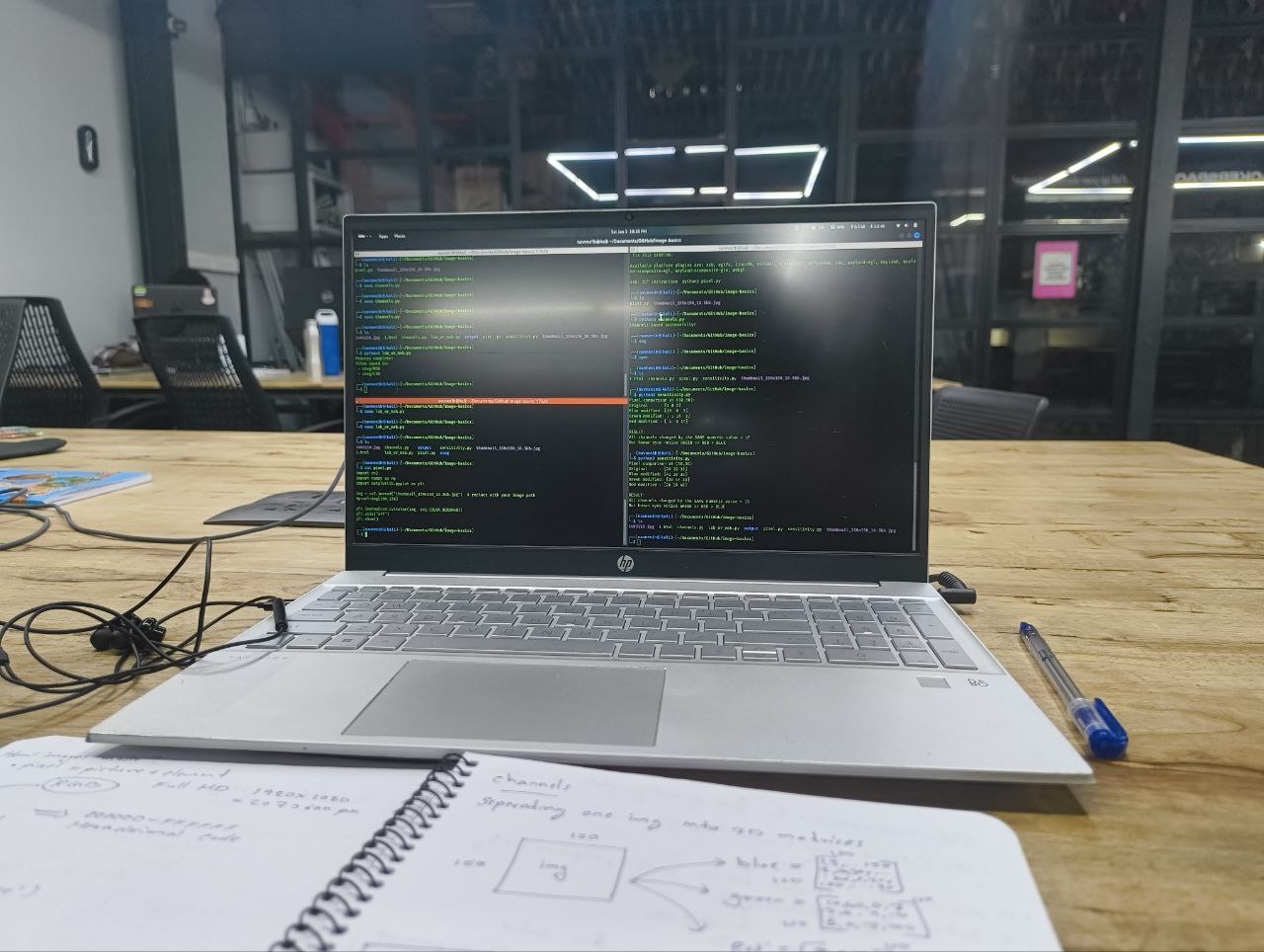
How Images are Made
I started with the most basic question, How are images actually made? I watched some videos to understand that computers don’t see colors, they only see numbers.
To see this in real life, I used Python and OpenCV. When I loaded an image, the code showed me that a picture is just a giant grid of numbers.
import cv2
import numpy as np

img = cv2.imread("image.jpg")

print(type(img))  # This shows the data type
print(img.shape) # This shows the height, width, and color layers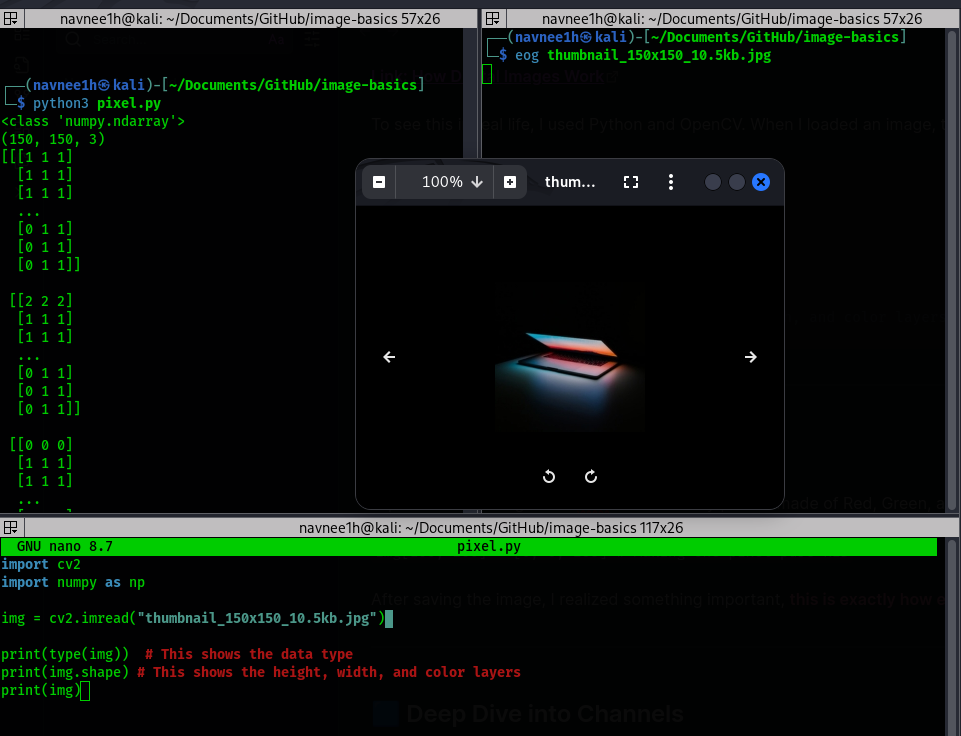
Modifying Pixels and RGB
I spent time learning about RGB values. Every pixel is made of Red, Green, and Blue. I tried to modify the pixels myself with this code:
img[100, 200] = [0, 0, 255] # Making one pixel pure RED
After saving the image, I realized something important, this is exactly how editing software works. Whether it is Photoshop or a simple filter, they are all just changing pixel numbers.
Deep Dive into Channels
Next, I looked into channels. This means separating one image into three different 2D layers.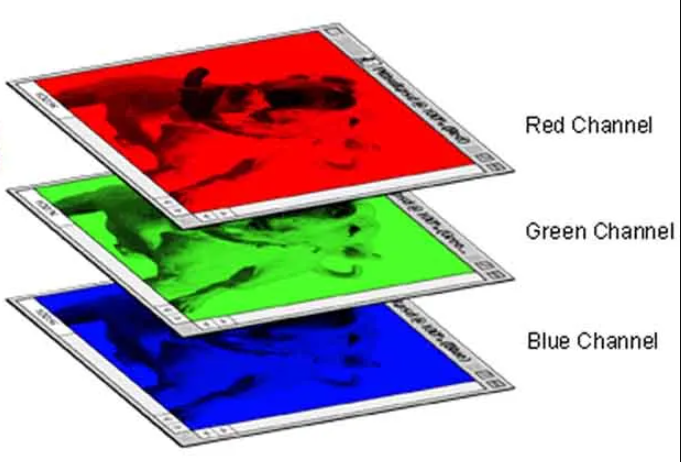
I learned that humans see colors differently. We are very sensitive to green, but our eyes almost don’t notice small changes in the Blue channel. I tested this with a photo of a superstar. When I changed the blue values slightly, the image looked exactly the same to my eyes. This is where the theory of steganography begins, using those “hidden” spots to tuck away data.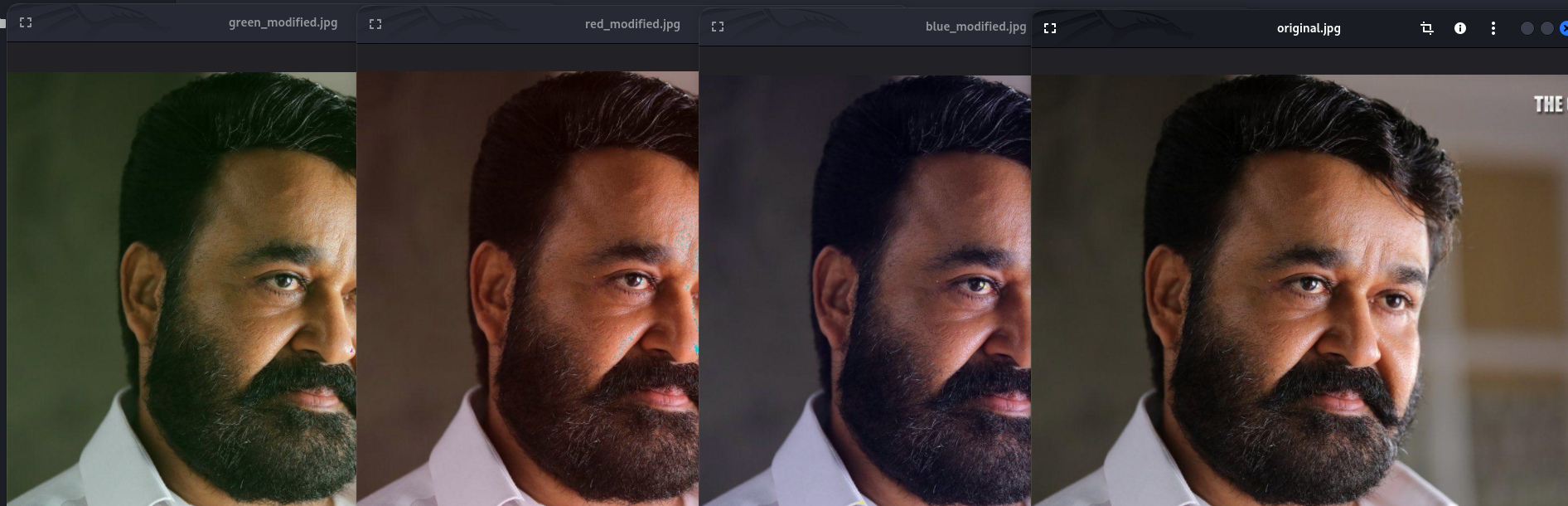
Human vision sensitivity
Human eyes:
- 👁️ Most sensitive → Green
- 👁️ Medium → Red
- 👁️ Least sensitive → Blue
So if we slightly change:
- Green → very noticeable ❌
- Red → somewhat noticeable ⚠️
- Blue → almost invisible ✅
I also tried converting images to Grayscale. I compared the Average method to the Luminosity method. The Luminosity method is much better because it matches how our eyes actually see brightness.
Steganography and LSB
This led me to steganography, which is the art of hiding data inside images. I focused on LSB (Least Significant Bit).
I found that if you change the very last bit of a number (like changing 255 to 254), the change is invisible to humans. I demonstrated why LSB is better than MSB (Most Significant Bit) using the same superstar image. If you change the MSB, the image breaks, but with LSB, it stays perfect.
I practiced modifying the Blue values to hide data. It works because our vision sensitivity is so low in that channel.
The Big Problem (Why LSB Fails)
Even though LSB is cool, I found its biggest weakness.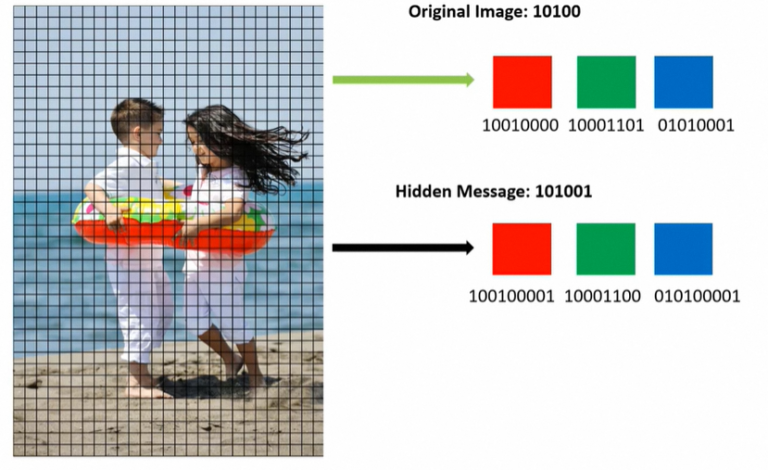
- Resize the image.
- Take a screenshot.
- Convert the file from PNG to JPG.
Steganography only works if the image stays exactly the same, hidden msg is destroyed when edited,resized or compressed.So the original image must be sent without any changes.
My ultimate goal is to create an invisible watermark that stays there even if someone takes a photo of the screen with a camera. LSB simply cannot do that.
Next Step
Today was just the start. To master this I need to focus on the frequency domain of image processing. Instead of changing pixels, I need to look at the math behind the whole image structure.
It’s late here, but I’m excited for tomorrow.